
Easy 100% Tallow Basil Mint Soap Recipe
Learn how to make a 100% tallow soap recipe using the in the pot swirl method, blending basil and mint for a refreshing, natural, skin-loving bar.

This post may contain affiliate links. Please read our disclosure policy
Want to learn how to make tallow dish soap? Check out my recipe for a Solid Tallow Dish Soap Bar!
Pin Now For Later
Why You’ll Love This
Ease – Making 100% tallow soap is super easy—just one oil and simple ingredients.
Custom – Tallow soap is fully customizable, allowing you to choose your favorite scent, color of choice, and include skin-soothing ingredients for a personal touch to fit your family’s needs.
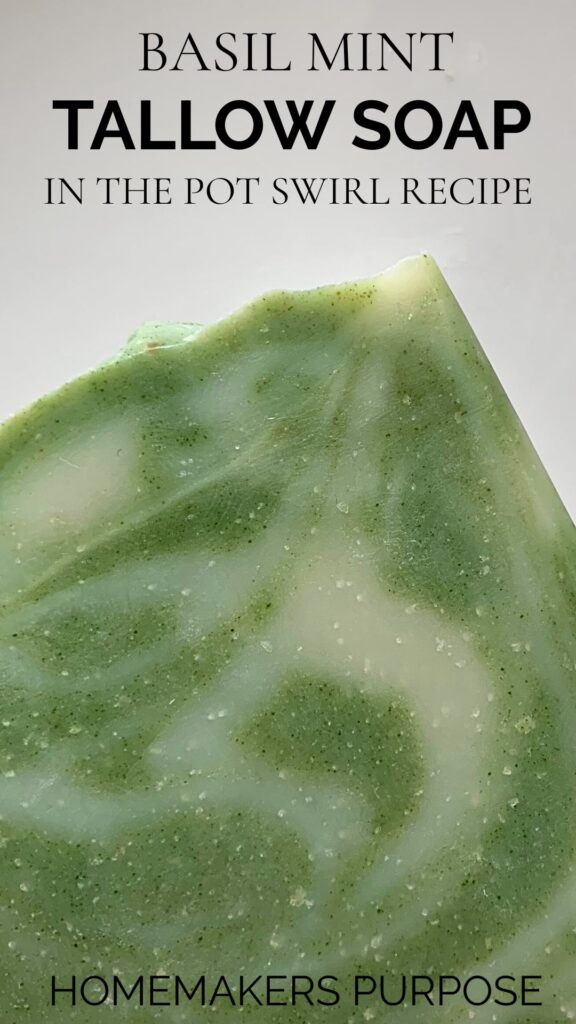
Design – The In The Pot Swirl method is simple to do at home and yields a beautiful unique design to each bar.
Top Tips for 100% Tallow Soap
- Prep Ahead– Having a clean kitchen and all tools & ingredients laid out beforehand will streamline the soap making process.
- Safety– To create soap, lye must be used. Lye is an extremely alkaline chemical that in its raw form or mixed with water can easily burn the skin. Once saponified, lye loses its caustic properties. This is why you should use gloves and goggles when making soap and allow your soap to cure for three weeks or more before use. Lye also releases fumes when mixed with water, so it is best to prep your lye solution outside or in a well ventilated area.
- White vinegar– Neutralizes lye and any areas that it comes in contact with either skin or cleaning the counters afterward.
- Trace – Trace is the term used when soap has blended to the consistency of pudding. This is where you can blend in soap additives and scents to customize the tallow soap bar and pour into a mold before it begins to harden.
- Heat Resistant Materials – Use heat resistant materials such as silicone spatulas and glassware as the soap making process creates heat. If using plastic make sure it’s heat resistant like silicone and only use them for soap and nothing else. Plastic will absorb small amounts of soap and lye.
- Lye – Source your lye beforehand. Sodium hydroxide lye is what is used in cold process soap. You can find it online or in most cleaning areas of stores. This is the one I source.
Why use Tallow For Cold Process Soap
- Skin Benefiting Nutrients in Tallow
- Vitamin A – Promotes healthy skin and skin repair.
- Vitamin D – Soothes skin and retains moisture.
- Vitamin E – Antioxidant
- Vitamin K – Vital for protecting the skin barrier.
- Palmitic/Stearic/Oleic Acids – Fatty acids that help protect, hydrate and clean the skin.
- Hard, Long Lasting Cold Processed Soap Bar
- Oils, like tallow, that are solid at room temperature create a hard bar of soap. This is due to the high levels of both palmitic and stearic acids that harden at room temperature creating a bar of soap that is not only solid but also resists turning to mush when it gets wet.
- Allowing your soap to dry between uses will also add to the longevity of your tallow soap bar.
- Lather Properties
- The fatty oleic acids in tallow, when saponified, create a creamy luxurious lather with small white bubbles. This cleansing property is similar in makeup to our own and gentle on skin.
- My Personal Opinion
- Like heals Like! This is a holistic principle and what oil is the closest to your own skin’s composition? Animal fats. Like heals like. Tallow soap leaves the skin soft and supple rather than dried out like so many other soaps. I’ve been using tallow soap for several years now and my skin has never felt dry out of the shower.
- I love using tallow that comes from the beef I purchase for my family allowing for good stewardship of the whole animal.
What Makes Tallow Soap A “Nose-To-Tail” Skincare Product?
We should always consider our stewardship of resources, and tallow is a versatile gift from God that deserves to be used wisely. If you’re sourcing bulk beef, think about using the entire cow. The Nose to Tail approach is not only a waste-not, want-not principle but also a way to honor the cow that gave its life for our nourishment.
Nourishment comes in many forms—both inside the body through food and externally through soap, lotion or anything else we put on our skin.
Tallow is produced by rendering beef fat, where the raw fat is melted to remove any impurities, leaving a pure product. From just one cow, I can create not only cooking oil for my family but also soap and beauty products for the entire year. It’s an abundant, valuable resource and without a specific request butchers regularly discard. If you’re interested in learning how to render your own tallow, check out this post.
How To Make In The Pot Swirl Tallow Soap
Note: This is a cold process recipe
Note: Always mix lye into water not water into lye to prevent over heating the solution.
If you choose to adjust this recipe or create your own, consult soapcalc.net to formulate properly.

Step 1
Weigh your water and lye separately and mix your lye water solution in a glass vessel. Set aside to cool, turning from cloudy to clear.

Step 2
Melt your weighed tallow into liquid form over low heat in a large pot. Roughly 100ºF (I have a separate dutch oven for soap)
Step 3
Carefully add the lye solution to the melted tallow.
Step 4
Using an immersion blender, mix the soap. Blending until reaching trace, a similar consistency to light pudding.

Step 5
Add in the basil and mint essential oils and any other soap additives like clay or colloidal oats.

Step 6
Divide the soap batter in half by pouring some into a second smaller vessel with a pour spout. Color one vessel with spirulina to create a green tone.
Step 5
Carefully pour the natural tone soap back into the larger vessel, swirling as you pour to create the In The Pot Swirl color method.
Step 6
Pour soap batter into a soap mold. Decorate top if desired and cool for 15-24 hours until the bar has hardened.
Step 7
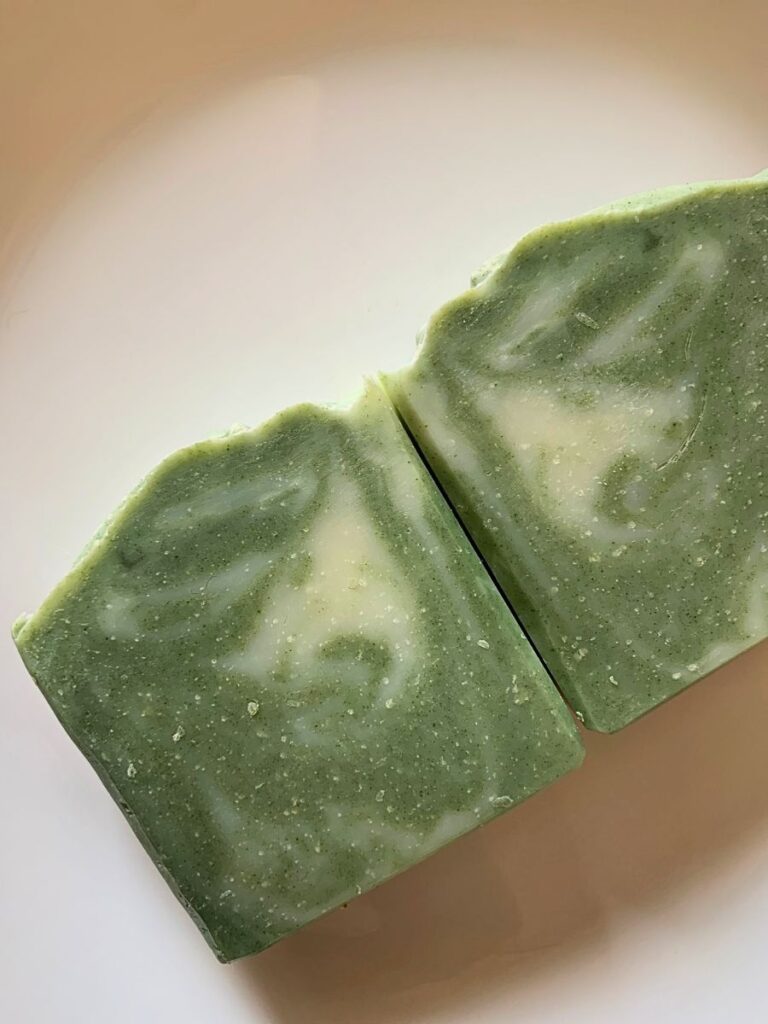
Once hardened remove soap from mold and cut into desired bar size. A 1″ Bar will weigh approximately 4 ounces when cured.
Cure bars in a cool well ventilated space for three weeks before use. This allows your soap to fully saponify and harden.
The In The Pot Swirl Method can give you a beautiful design unique to each bar, sometimes a butterfly effect.
Wanting to try other tallow soap recipes? Check out my 100% Tallow Soap.
Comment below your favorite soap scent.
Basil Mint Tallow Soap Recipe
In The Pot Swirl Basil Mint Tallow Soap
Materials
- 32 ounces Tallow
- 9.52 ounces Water
- 4.26 ounces Sodium Hydroxide Lye
- 1 ounce Basil Essential Oil
- .5 ounce Mint Essential Oil
- 1 TBSP Spirulina Powder
Instructions
- Make sure to weigh all ingredients with a digital scale and wear safety equipment. Do not use metal pans (except stainless steel) to make soap as it creates a reaction with lye that gives off toxic fumes.
- Weigh 9.52 ounces of water in a glass measuring cup. A mason jar works well for this.
- In a separate container, weigh 4.26 ounces of sodium hydroxide lye.
- Slowly mix lye into the weighed water, stirring continuously to ensure lye completely dissolves. A chemical reaction will immediately begin giving off heat and fumes. Make sure to do this in a well ventilated area. Set lye solution aside to cool. It will turn from cloudy to clear.
- Weigh 32 ounces of tallow and melt over low heat in a large pot. Roughly 100ºF (I have a separate dutch oven for soap making)
- Carefully add the lye solution to the melted tallow.
- Using an immersion blender, begin to mix the soap. Continue blending until soap reaches trace. Similar consistency to light pudding.
- Blend in desired scent (or leave unscented) and any additives. Best to mix with a silicone spatula to prevent a hard trace.
- Divide soap batter into two containers, add spirulina powder to one for color.
- Pour natural soap back into the colored using a swirling motion to create the in the pot swirl design.
- Pour entire soap batter into soap mold. Decorate top if desired and cool for 15-24 hours until bar has hardened.
- Once hardened remove soap from mold and cut into desired bar size. A 1" Bar will weigh approximately 4 ounces when cured.
- Cure bars in a cool well ventilated space for three weeks before use. Allowing your soap to fully saponify and harden.
No posts
Want to learn more about the soap making process? Ellen Ruth Soap on YouTube is an excellent resource.




What a beautiful and refreshing soap bar! I love it and its so simple to make.
Ive never heard of basil soap but that sounds absolutely amazing and I’ll have to be trying this ASAP!
Smells so fresh and love the feel of this soap!