
How to Mix and Match Vintage China for a Cozy Collected Home
Learn how to mix vintage china for a cozy collected home full of charm, character, and beautiful thrifted dishes for everyday homemaking.
This post may contain affiliate links. Please read our disclosure policy.
Thanks to modernity, there is a growing desire to return to the table — to hold onto the character and charm that was once woven into everyday living. Vintage china is making its way back into the kitchen, but not to sit untouched in cupboards waiting for a once-a-year holiday. Instead, these beautiful pieces are being brought back into daily life as a way to slow down and breathe in beauty again.
To quote Thomas John Carlisle:
“It is good to use the best china… there is a risk, of course… but not to touch, to use, to break — that is the deadly catastrophe. Where nothing is enjoyed or broken or spoken or spilled — where nothing is ever lived, loved, poured over, laughed over, wept over, lost or found.”
If you, too, long to see cast-aside pieces brought back to purpose, then thrifting vintage china may be the perfect place to begin. There is something deeply satisfying about finding beauty in what others overlook — especially the imperfect and mismatched pieces that often carry the most charm.
As a homemaker, I spend much of my day in the kitchen. Surrounding those ordinary moments with beauty changes the atmosphere of the home in a quiet but meaningful way. Serving a meal I’ve lovingly prepared on dishes someone else once created with care and artistry brings a kind of solace to my soul. Vintage china reminds me that even everyday tasks can hold beauty and intention.
Maybe you’ve thrifted a few vintage pieces already, inherited dishes from your grandmother, or received china at your wedding that rarely leaves the cabinet. Or perhaps you simply love the cozy collected look of mismatched vintage dishes and want to bring more warmth and character into your home.
However your collection begins, mixing and matching vintage china creates a home that feels welcoming and beautifully lived in.
Pin Now For Later
Why Vintage China Is So Loved Again
A Return to Slower Living
Vintage everything has been the popular decor trend the last few years – with design aesthetics of:
- Cottage Core
- Academia
- Old World
- Quiet Luxary
- Old Money
It’s no surprise that vintage dishes would be drawn into the trend. With homemaking and cottage core influencing design, thrifted china patterns are bringing the old world aesthetic into the kitchen. Harkening towards simpler times and quieter days where phones were attached to the wall, not our hands. Vintage china invites us to slow down and return to the table.
Vintage China Adds Character Modern Dishes Often Lack
Unlike the stark white of modern dinnerware, vintage dishes are full of character, pattern and color. Each piece feels slightly different — not flawed, but unique.
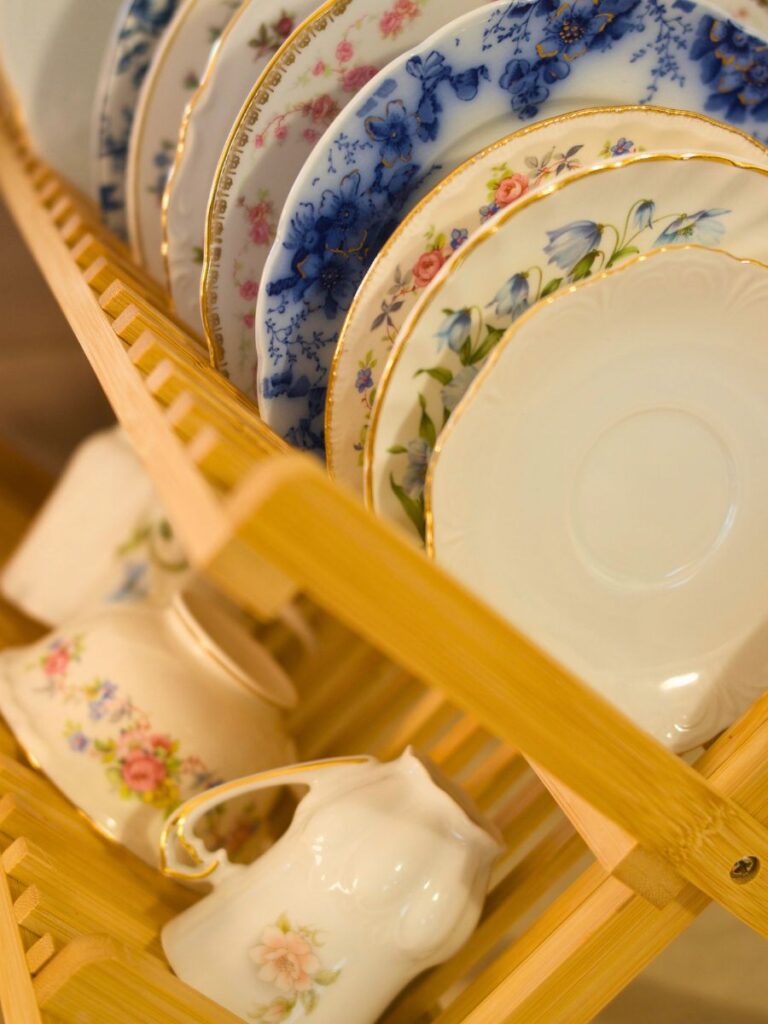
From feminine edges and hand painted florals, intricate patterns full of color to subtle single toned options with gold or silver trimmings – vintage dishes can easily complement a wide range of home styles. Whether your aesthetic leans soft and romantic or more simple and neutral, there is always a way to incorporate them naturally into your kitchen.
Adding to the “collected over time” aesthetic that pulls on the nostalgia we all crave, vintage china tells a story -one built slowly, piece by piece.
That sense of history and nostalgia is exactly what so many homemakers are craving again in their homes.
The Secret to Mixing and Matching Vintage China Beautifully
One of the most common questions about vintage china is how to mix patterns without the table looking busy or mismatched in a chaotic way. The secret isn’t finding pieces that are identical — it’s learning how to create cohesion through color, balance, and repetition.
Vintage dishes do not need to match perfectly to feel intentional. In fact, part of their charm is the variety. When thoughtfully combined, mismatched china creates a table that feels layered, collected, and naturally beautiful.
I would recommend choosing a style of china – European, American or Asian. Each country has its own style and creating cohesion can be best achieved when all the pieces originate on the same continent.
1. Start With a Unifying Color Palette
Choosing a consistent color family makes mixing much easier. For example:
- Soft pink florals
- Blue and white patterns
- Ivory and gold
- Muted pastels
- Classic neutrals
- All gold or all silver trimmed
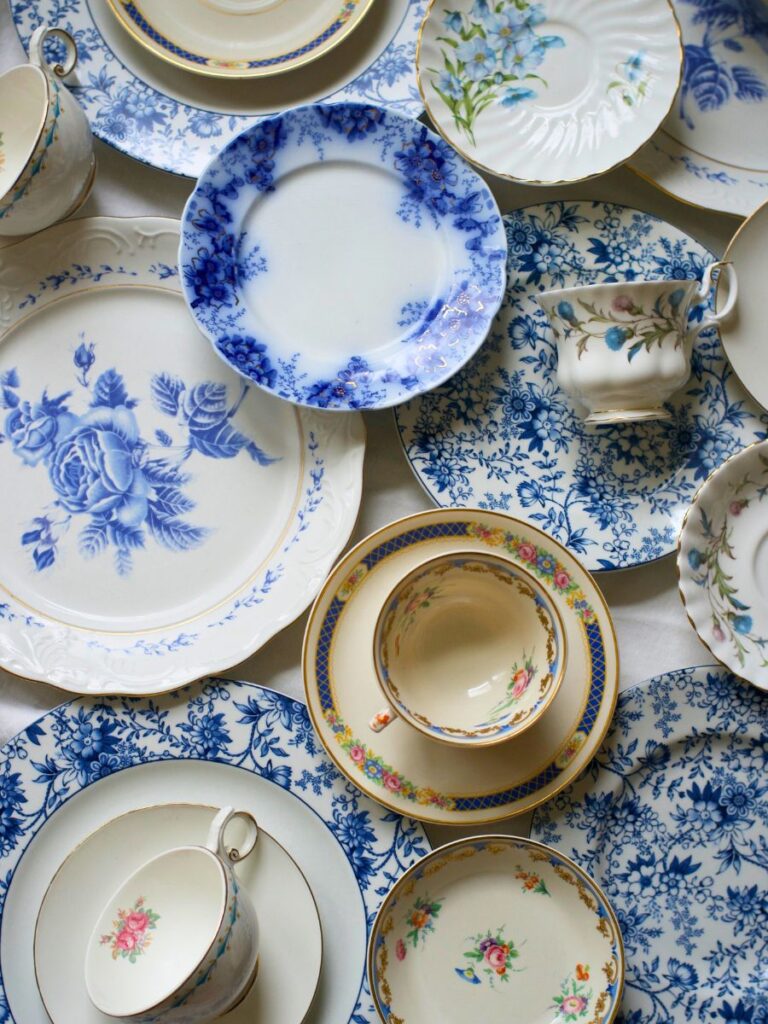
When the tones work together, the patterns can vary freely without feeling overwhelming.
2. Repeat One Element Throughout the Table
Repetition creates harmony. This could be:
- Gold trim on multiple pieces
- Scalloped edges
- Similar floral tones
- Transferware patterns
- Matching shapes or plate sizes
- Using clear glass and crystalware to bring in cohesion.
Even if the designs differ, repeating one detail helps everything feel connected.
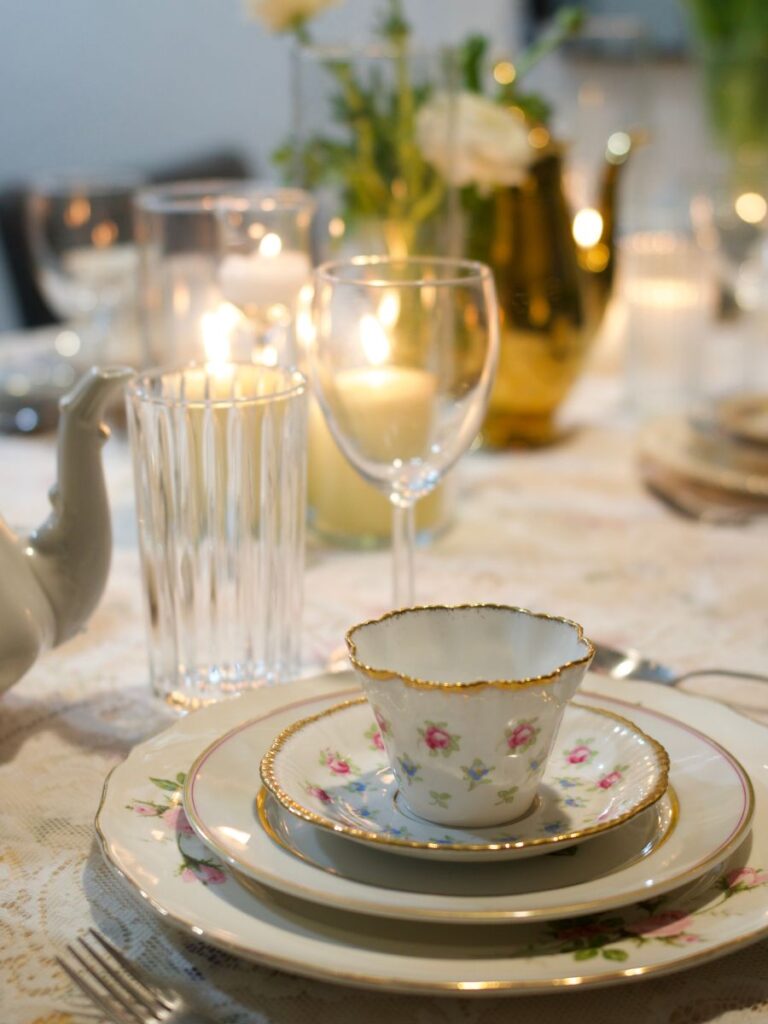
3. Mix Bold Patterns With Simpler Pieces
Pair detailed floral plates with more subtle or solid-toned dishes. Tables feel busy if every piece has a pattern. Adding simple ivory, cream, or neutral pieces provides visual breathing room.
Allow the centerpiece elements like vases and candlesticks reflect the trimming on the dishes or be clear glass to bring ease to the eye. Bring color to these elements by matching candle colors or florals to the color palette.
Let your tablecloth be the background – reflecting a color found throughout the dishes or a neutral to let the dishes shine as the centerpiece. Using a vintage lace cloth will bring texture without creating distraction.
4. Layer Different Sizes and Shapes
Mixing dinner plates, salad plates, teacups, serving bowls, and platters adds dimension. Layering creates depth and gives the table that collected-over-time aesthetic that feels warm and inviting.
5. Let It Feel Lived In
A beautifully mixed table does not need to look formal or staged. Vintage china shines when it feels used, enjoyed, and part of everyday life. Small imperfections, slight variations, and pieces gathered over time all contribute to the charm.
The goal is not perfection — it is warmth.
Where to Find Vintage China
You can find vintage china in many everyday places — you don’t need to be an expert or have a large budget, just willing to look closely and often.
Thrift Stores
Most Cost Effective
- Check dishware aisles slowly and thoroughly
- Look for single pieces as well as sets
- Visit often since inventory changes quickly
- Focus on patterns that match your home style
- Easy to curate a mismatched collection
Estate & Yard Sales
2nd Most Cost Effective
- Great for full collections and matching sets
- Often include teacups, platters, and serving pieces
- Useful for building a collection quickly
- Rare individual pieces or dishes
Online Marketplaces
Cost Effective
- Helpful for completing partial sets
- Good for finding specific brands or replacement pieces
- Always check photos and condition carefully
- Sites like Replacements for a missing piece or to research a pattern
Antique Stores & Flea Markets
More Expensive/More Unique
- More curated and organized selection
- Helpful for finding specific patterns or statement pieces
- Higher prices but quality is better
Family Heirlooms
- Meaningful pieces passed down through generations
- Often already have history and sentimental value
- Can be used daily or displayed in your home
What to Look For When Thrifting Vintage China
When thrifting vintage china, focus on pieces that are both beautiful and functional. Small imperfections are normal, but there are a few things worth checking before bringing pieces home.
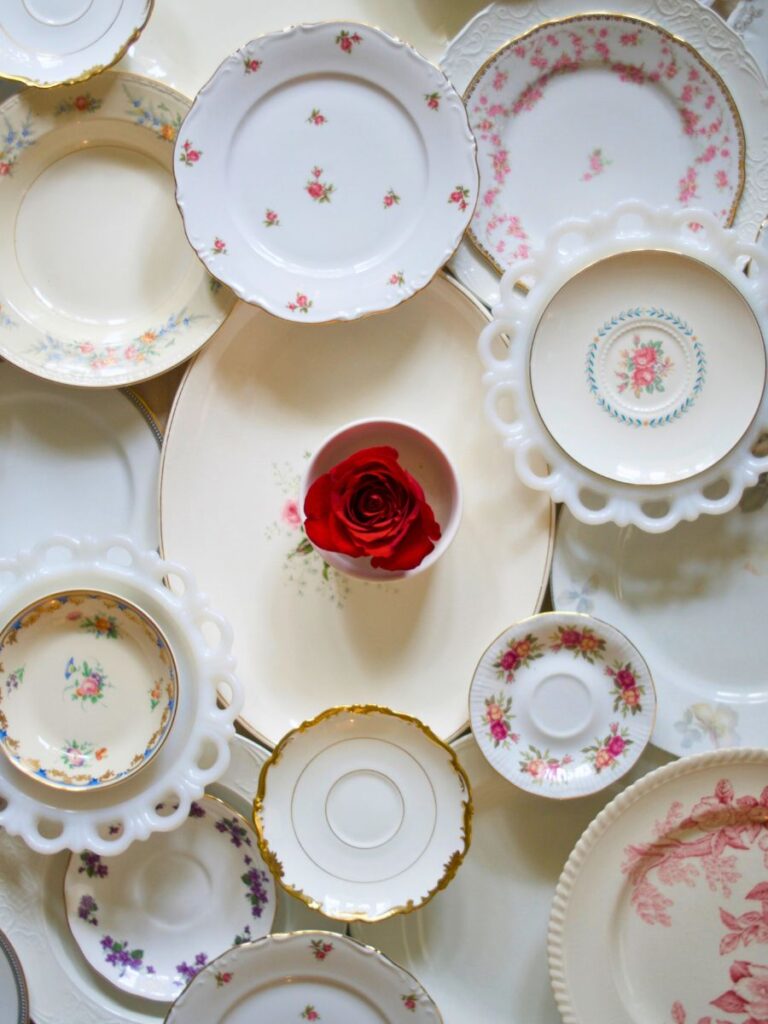
- Check the condition
Inspect pieces for chips, cracks, or repairs, especially around rims, handles, and edges. Slight wear is part of the charm, but structural damage can affect durability. Crazing is fine hairline cracks that appear in the glaze. Light crazing is common in older china and often adds to the character of a piece, but excessive crazing can weaken dishes or cause staining. Personally I avoid crazing in dishes I plan on utilizing daily. - Look for maker’s marks
Turn pieces over and check the back stamp for the maker or country of origin. Some popular vintage brands include Haviland, Noritake, Royal Albert, and Wedgwood. - Choose pieces that coordinate
Look for colors, patterns, and trim details that complement your home and existing dishes. Keep with your defined color pallet and continent of origin for cohesion. - Don’t overlook single pieces
Some of the most charming collections are built one piece at a time. Individual plates, teacups, and serving dishes often add more personality than perfectly matching sets. My personal preference is a mismatched collected set – there’s a story behind every piece. - Think about everyday use
If you plan to use your vintage china regularly, choose pieces that feel sturdy and practical for daily meals. Beautiful dishes do not need to be saved only for special occasions.
How to Display Vintage China in Your Home
Displaying vintage china does not have to feel cluttered or overly formal. When styled intentionally, these pieces add warmth, charm, and character to a home while still remaining practical for everyday living.
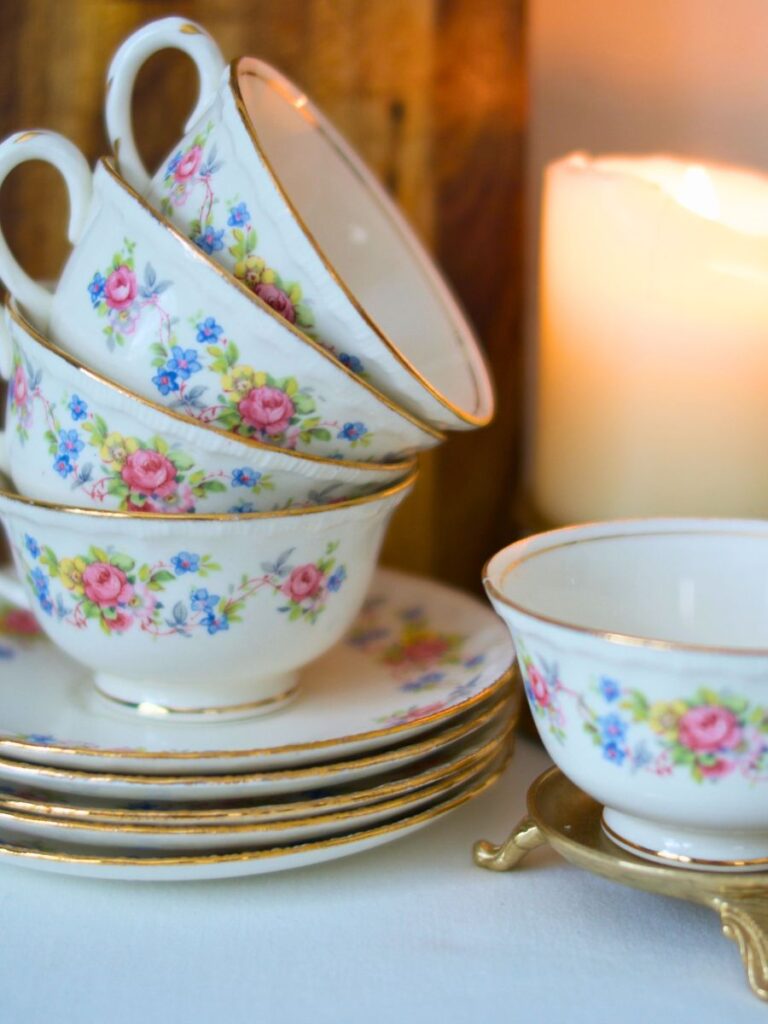
- Use open shelving
Stacked plates, teacups, and serving bowls create a cozy collected look while still being easy to access and use daily. - Create intentional storage nooks
A small shelf, plate rack, or corner hutch can turn everyday storage into something beautiful rather than cluttered. - Hang plates as artwork
Decorative plates add softness and texture to kitchens and dining spaces. Plate hangers, adhesive discs, and decorative hooks make displaying them simple. In my own kitchen, I choose to display only green transferware on the walls to create a more cohesive and intentional feel. - Use vintage china in practical ways
Small china containers like toothpick holders can be repurposed for q-tips, a covered sugar bowl works beautifully beside the stove filled with salt, and serving bowls make charming fruit bowls on the counter. - Mix decorative and functional pieces together
Pair dishes with cookbooks, candlesticks, silver trays, or linens to create displays that feel layered and lived in. - Keep favorite pieces within reach
Vintage china feels most beautiful when it is used and enjoyed regularly rather than tucked away for special occasions only.
Caring for Vintage China and Silver
Vintage china is meant to be enjoyed, (It is good to use best dishes) but it does require a bit more care than everyday dinnerware. With simple habits, these pieces can last for generations.
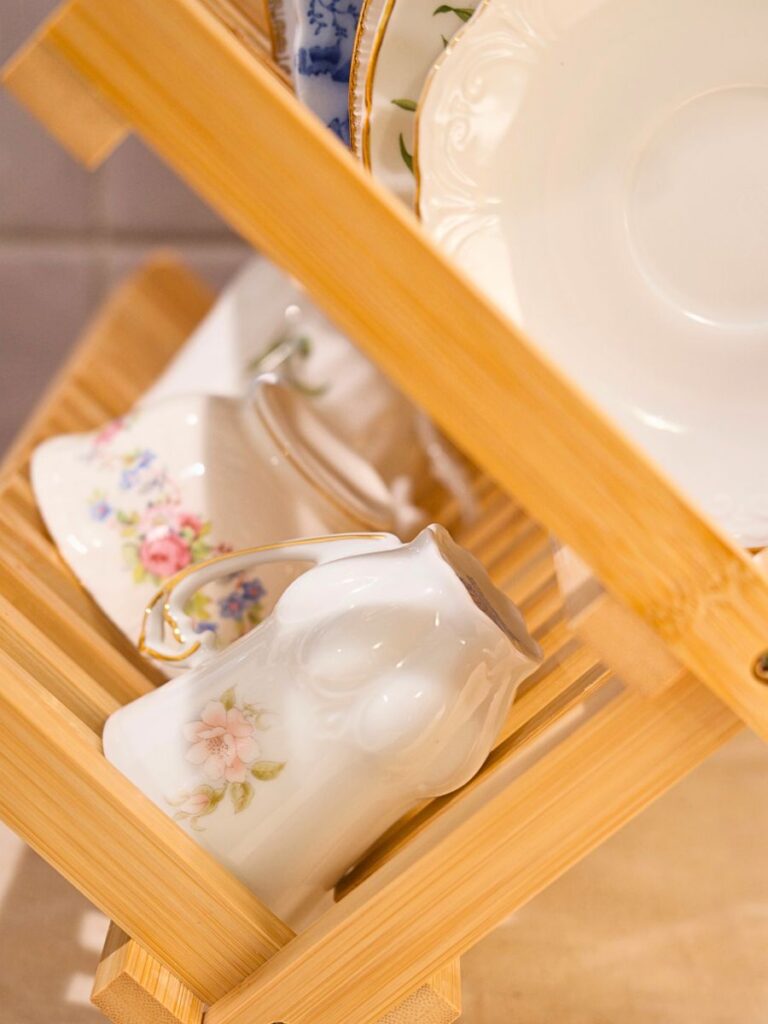
- Hand wash
Wash vintage china by hand using mild soap and warm water. Avoid soaking pieces for long periods, as extended water exposure can weaken older glaze and increase staining over time. - Avoid dishwashers and microwaves
High heat and strong detergents can fade patterns, weaken glaze, and damage delicate finishes. This is especially important for pieces with gold or silver trim, which can wear away quickly in the dishwasher. Remember there are actual metals on the trimming that cannot go in a microwave. - Store with care
Use soft cloths, felt separators, or padded storage when stacking plates. This helps prevent chips and keeps edges protected over time. - Polish silver pieces gently
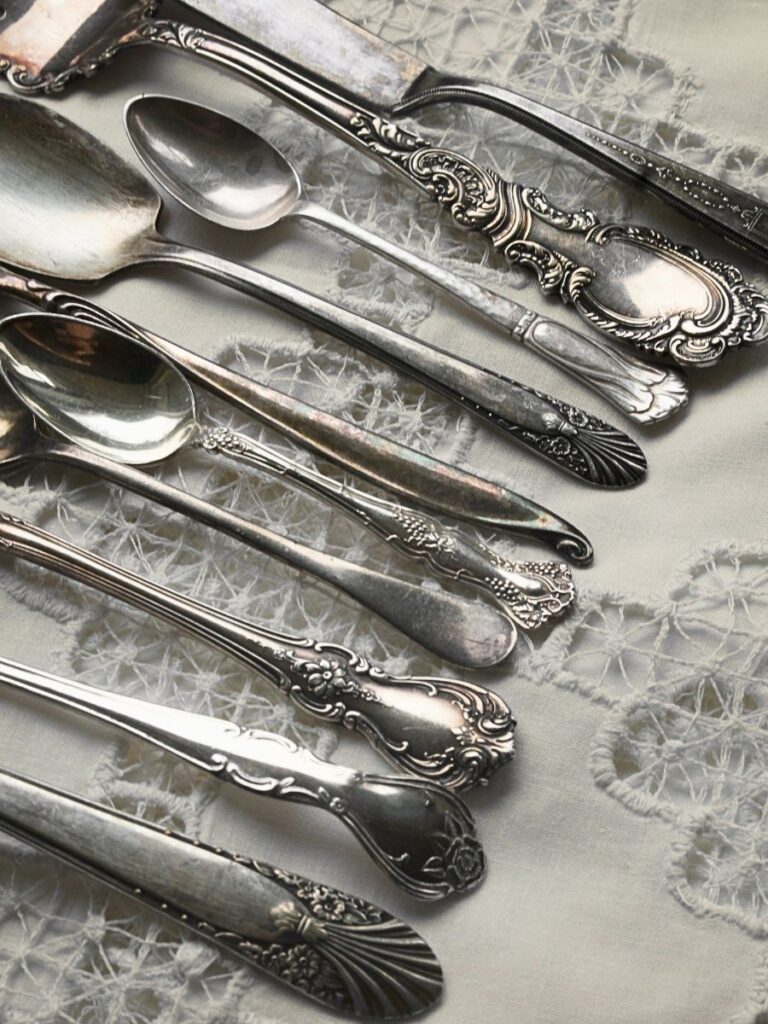
If you use vintage silver trays, teapots, or serving pieces, a soft polishing cloth or gentle silver polish will help maintain their shine without damaging intricate details.
How I Use Vintage China in Everyday Homemaking
For me, vintage dishes are not something saved for special occasions — they are woven into everyday home life. Beauty doesn’t need to be reserved for holidays or guests; it can be part of the ordinary rhythm of the day.
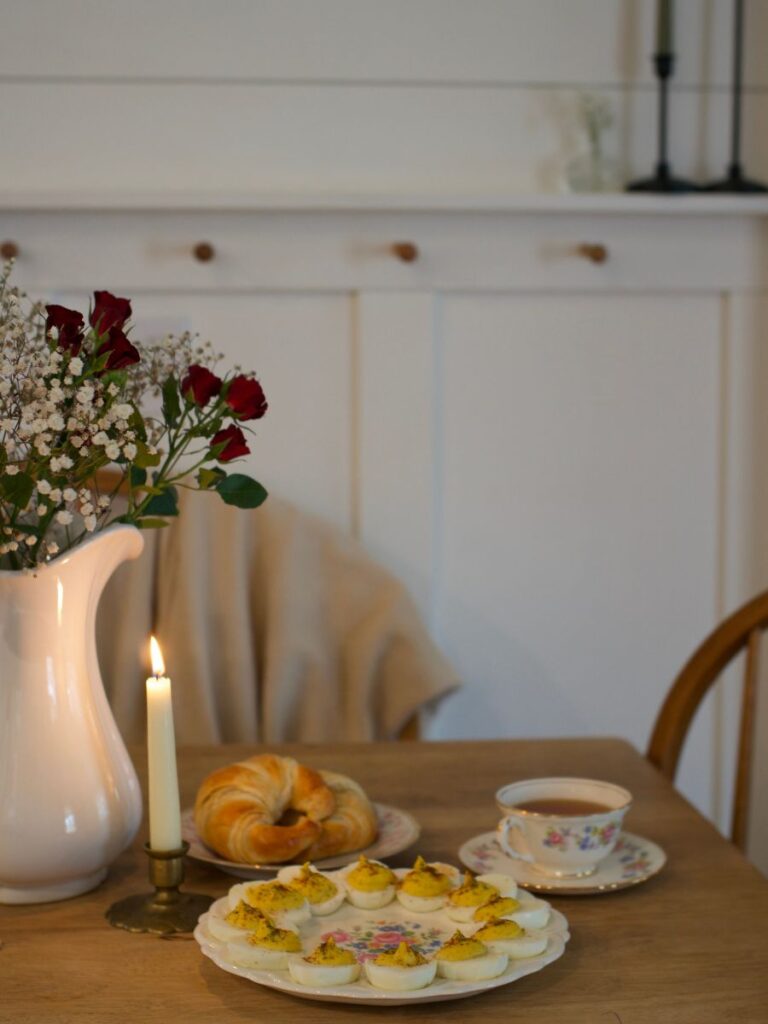
- Morning routines feel more intentional
Coffee or tea served in a delicate cup slows the morning down. In my home I love using a creamer pitcher – pausing to see the delicate color of milk turn black coffee into latte brown is mesmerizing. A simple breakfast feels more purposeful when it’s served on a beautiful plate. - Everyday meals become more meaningful
Whether it’s a quick lunch or a family dinner, using vintage dishes brings a sense of care and presence to the table. It turns routine meals into something quietly special. I found a set of dishwasher safe (I’ve got kids), made in England blue florals that we use everyday. - Small moments throughout the day feel softer
Afternoon tea, baking, or even standing at the kitchen counter becomes more enjoyable when surrounded by pieces that feel beautiful and thoughtful. Even in summer I pour ice-tea from a vintage coffee pot. - It encourages slowing down
When you choose to use something delicate or meaningful, you naturally move a little slower. You pay more attention to the moment instead of rushing through it. You can begin to eliminate hurry. - It brings beauty into ordinary work
Homemaking involves a lot of repetitive tasks, but using vintage china adds a layer of joy to the everyday work of cooking, cleaning, and caring for a home. You may find you enjoy washing dishes if they have a pretty pattern. - It reminds me that home is meant to be lived in
These pieces aren’t just for display — they’re meant to be touched, used, and enjoyed. The slight imperfections, the mismatched patterns, the collected feel of it all reflects real life inside the home. And if one is broken, they are easily replaced, maybe by one I’ll cherish even more.
FAQ’s About Vintage China
Yes, most vintage china is safe for everyday use as long as it is free from cracks or significant damage. Hand washing is recommended to preserve patterns and finishes, especially on older pieces. You can also get a lead test kit if you want to check the paint.
The key is cohesion, not perfection. Stick to a shared color palette, repeat small details like gold trim or florals, and balance bold patterns with simpler pieces to create a collected, intentional look.
The best places to find vintage china include thrift stores, estate sales, antique shops, flea markets, family heirlooms, and online. Many of the most beautiful collections are built slowly over time from a mix of sources.
It is good to use
Thomas john carlisle
best china
treasured dishes
the most genuine goblets
or the oldest lace tablecloth
there is a risk of course
every time we use anything
or anyone shares an inmost
mood or moment
or a fragile cup of revelation
but not to touch
not to handle
not to employ the available
artifacts of being
a human being
that is the quiet crash
the deadly catastrophe
where nothing
is enjoyed or broken
or spoken or spilled
or stained or mended
where nothing is ever
lived
loved
pored over
laughed over
wept over
lost
or found.


Oh, love this! Such a good reminder that *life* is the special occasion. Great tips and practical suggestions!
I LOVE vintage China and this blog post! Thank you for this very helpful guide! 🙂
I love piecing together vintage and modern decor. A thrift store loves to see me coming. LOL. Definitely taking these tips on my next shopping trip!